

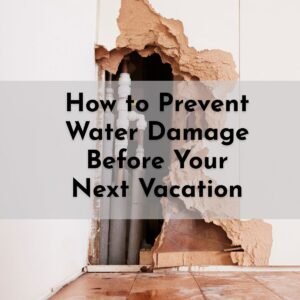
 There’s nothing better than locking the door, heading out for vacation, and finally letting yourself relax for a week or two. But too many homeowners come home to an unwelcome surprise after vacation: water damage. A slow leak from a faucet, a clogged gutter, or a hidden pipe problem can quietly cause chaos while you’re away.
Water damage is more common than most homeowners expect. According to the Insurance Information Institute, water damage and freezing claims are among the most frequently filed home insurance claims in the U.S., affecting roughly one in 50 insured homes each year. And an empty house is especially vulnerable: there’s no one around to spot the slow drip under the sink, the washing machine hose that finally gives, or the gutters overwhelmed by a summer storm.
The good news? A little preparation goes a long way. This guide walks through practical, proven steps to protect your home before you head out and explains what to do if you come back to damage despite your best efforts.
Why Vacant Homes Are More Vulnerable to Water Damage
When you’re home, you notice things. You hear the toilet running. You see the small puddle near the dishwasher. You feel the humidity in the basement that wasn’t there before.
Leave for a week or two, and those early warning signs go undetected. A slow leak that would’ve been caught on day one can cause significant structural damage and mold growth can begin within just 24 to 48 hours of water exposure. That’s not a mess; that’s a restoration project.
Understanding this risk is the first step. Acting on it before you leave is the second.
What to Inspect Before You Leave: Hidden Sources of Water Damage
Faucets, Toilets, and Plumbing Fixtures
Even a slow drip carries consequences. Over days, a leaking faucet can stain surfaces, soften flooring, and create the moisture conditions that mold needs to thrive. Walk through every bathroom and the kitchen before you go. Test each faucet. Check that toilets aren’t running. If you notice a problem, fix it before you leave, not after.
Appliance Hoses and Connections
Appliances are a leading source of residential water damage. Washing machines, dishwashers, and refrigerators with ice makers all rely on hoses and connections that wear out over time. Pull appliances away from the wall if needed, and check that hoses are secure, not cracked, and free of visible wear. Replacing a $20 washing machine hose before a trip is far cheaper than dealing with the damage a burst hose can cause in your absence.
Water Heater
Water heaters have a lifespan and when they fail, they can fail catastrophically. If yours is approaching 10 to 15 years old, it’s worth having it inspected before an extended trip. Look for rust, moisture around the base, or listen for unusual sounds.
Roof and Basement
A compromised roof or foundation is an open invitation for rainwater to enter during a storm. Do a quick visual check before you leave. Look for loose or missing shingles, cracks around windows and doors, and any signs of existing moisture in the basement. Catching these early prevents vacation from becoming the worst possible time to find out about them.
Steps to Prevent Water Damage While on Vacation
1. Shut Off the Main Water Supply
This is the single most effective step you can take. Turning off the main water valve eliminates the risk of most in-home leaks entirely because there’s no pressurized water to escape. If shutting off the main valve isn’t practical (for example, if someone will be watering plants or using the home in any capacity), consider shutting off supply lines to individual appliances like the washing machine and dishwasher instead.
2. Clear Gutters and Downspouts
Clogged gutters are a surprisingly common cause of water damage during vacations. When gutters overflow, water pools near the foundation, finds gaps in siding, or backs up under roofing materials. Before you leave, clear out leaves, debris, and blockages. Confirm that downspouts direct water at least three to four feet away from the foundation.
3. Check Your Sump Pump
If your home has a basement or is in an area prone to heavy rain, your sump pump is a critical line of defense. Test it before you go by pouring water into the sump pit and confirming it activates. Consider a battery-powered backup pump for added protection in the event of a power outage during a storm.
4. Ask a Trusted Person to Check In
Technology helps, but a neighbor or friend who can physically walk through your home every day or two is still one of the best safeguards available. Brief them on where the main water shutoff is, what to look for, and how to reach you. Early detection of a small problem is the difference between a repair and a full restoration.
5. Consider Smart Water Monitoring Devices
Smart home water sensors have become increasingly accessible. Devices like leak detectors placed under sinks, near water heaters, and behind appliances will send an alert to your phone if moisture is detected. Some systems can even automatically shut off the water supply when a leak is sensed. This kind of monitoring isn’t a replacement for physical checks but it adds a valuable layer of real-time awareness when you’re hundreds of miles away.
What to Do If You Come Home to Water Damage
Even with thorough preparation, unexpected events happen. If you return home to signs of water damage—wet floors, discolored walls, musty odors, or standing water—here’s what to do.
- Don’t delay. The longer water sits, the more damage it causes. Mold can begin developing within 24 to 48 hours, and structural materials absorb moisture quickly.
- Prioritize safety. Do not enter areas where water may have come into contact with electrical systems. Turn off power to affected areas if it’s safe to do so at the breaker, and call a professional before re-entering.
- Document everything. Photograph the damage before any cleanup begins. This documentation is essential for your insurance claim.
- Call a professional restoration team. Water damage restoration specialists do more than remove standing water. They use industrial drying equipment, moisture meters, and proven techniques to fully dry out a structure, prevent mold, and assess whether materials need to be replaced. Reynolds Restoration Services responds 24/7, so you’re never waiting for help when time is critical.
Peace of Mind While You’re Away
Preparation takes a few hours. The peace of mind it provides lasts the entire trip. By inspecting potential problem areas, shutting off water sources, and enlisting a trusted contact, you significantly reduce the likelihood of returning to a damaged home.
And if something does go wrong, acting fast with professional help is the best way to protect your home’s structural integrity, air quality, and long-term value.
Heading out of town? Take the steps above before you go. And if you come home to water damage, contact Reynolds Restoration Services immediately. Our team is available around the clock, ready to help you recover quickly and confidently. With offices in Harrisburg, Pa; King of Prussia/Philadelphia, Pa. and Elkridge, Md., our team can be on site quickly to help get your home back to its pre-loss condition.

President of Reynolds Restoration Services. Over 20 years of experience in the emergency restoration industry.